Showing posts with label 4 hearts. Show all posts

Friday, 6 August 2010

Truman Capote: Breakfast at Tiffany's

Will anyone help me understand why this book is so popular? Why did they make a movie based on it? Why do you have to read this book in one seating? I simply can’t put my finger on it.

The story’s told by a nameless narrator and it centres on Holly Golightly – a young actress living in New York of early 40ties, constantly going out and charming rich men in order to find her place in the world, the place where she belongs. Until then she’s travelling. We don’t know much about the main characters, the narrator remains nameless, we only know he’s a writer still waiting to be discovered. We don’t know much about Holly’s past and future. Although the past is slowly revealed the main focus remains on the present – the unusual selection of people Holly attracts and their interests in staying close to her. All this in the light of the interesting and touching relationship between her and our narrator.

In a way it’s a sad story of a girl looking for her destiny not really knowing where it might be hiding. She compares herself to a wild animal or to a hawk whose nature doesn’t let him settle in one place, with one person.

And there’s the movie of course. With lovely Audrey Hepburn, with the beautiful Moon River song. I still don’t know why but both the book and the movie have charmed me so much that I think I’ll put the movie on this evening, just to hear the song again, just to live in that New York again. And would you believe that this whole story, all this charm, all this real and non-happy ending tale is covered on less than 100 pages? And I already miss it and I still don’t know why…

My rating: YYYYY

Wednesday, 4 August 2010

Yann Martel: Life of Pi

This is the second time I read this book. Since I read it for the first time a few years ago I only remembered that it was about an Indian boy stranded on a boat in the middle of the ocean with a tiger as his only companion. Oh, and I also remembered I loved it.

It was a pleasure to go back to this book and read it again. The first part of it feels a little long at times, which is probably why I didn’t remember it at all but I guess in a way it gives you lots of insight into understanding what happened on that boat later on. The life of young Piscine, his experience as being the son of a zoo keeper, his religious interests and his life as an adult later on – in a way it is all linked to his time on the lifeboat.

Pi spent 227 days on that lifeboat after the ship that was taking him and his family to Canada sunk in the Pacific Ocean and he was the only one to survive. Well, not quite the only one. He had a company of a zebra, hyena, orangutan and a Bengal tiger named Richard Parker. Pi only survived as he respected the tiger and taught him to respect him back.

Even though this book is classified as fantasy in some reviews don’t expect anything fantasy-like to happen like Pi getting friendly with the tiger, them becoming best friends or the animals talking. No, it’s all a very real story and every day on the boat teaches us something about the human and animal nature. Especially when in the end Pi tells another version of the story to the Japanese maritime officers who are investigating reasons for the ship sinking and who find it hard to believe the story with the animals on the boat.

A really special book, again, unique and original in the story it tells (even though Martel was initially accused of plagiarism by a Brazilian writer who claimed to have published a similar story over 10 years before). A great book to reach for and enjoy!

My rating: YYYYY

Tuesday, 27 July 2010

Vikas Swarup: Six Suspects

Given The White Tiger is one of few books that I gave 5 hearts to I eagerly reached for another book written by and Indian author. And it’s not any author, it’s the author of Q&A, the book which became the script base for the world’s famous Slumdog Millionaire movie. I didn’t read Q&A, I loved the movie though. The story was cleverly constructed, had a new and original idea behind it. Plus it was set in Indian reality which fascinates me a lot.

Six Suspects is Swarup’s second book and its story is equally surprising, fresh and original. It starts of with a murder of a film producer, a son of a minister who manages to get away with anything and everything that’s against the law. The story then goes back in time and looks at lives of six people who become suspects for this murder.

One is a tribal from Andaman Islands somewhere in the Bay of Bengal. One is a mobile phone thief who dreams of living a life of the rich. There is also a famous Bollywood actress, a state minister and father of the murdered Vicky Ray, a retired politician and womanizer and lastly, an American Wal-Mart forklift operator who travels to India to get married to his pen pal.

We follow the days in their lives leading up all of them being at Vicky Rai’s party where the crime was committed. It’s an interesting mixture of different parts of Indian life we get introduced to, from the poorest to the richest and most influential in the country. We get to see how money can buy everything and everyone. And when by the end, when you’re starting to think that justice will finally win we witness the process of finding the murderer and we wonder whether there is any hope left.

It’s a really enjoyable book, unique and refreshing. Sometimes slightly difficult to follow with the number of Indian names (especially the part about Vicky’s father) but nonetheless interesting and gripping. The ending is slightly surprising, feels a bit as if the author wanted to play a cheeky joke with the reader but it was a funny joke, definitely made me smile. I think it could follow the paths of Slumdog… if anyone made it into a movie.

My rating: YYYYY

Thursday, 10 June 2010

Ian McEwan: Enduring Love

Despite a few critical reviews of this book I’ve seen and the bad reviews of the movie which I fortunately haven’t seen I approached this book with an open mind and I wasn’t disappointed. It’s a novel based on a true story of a mentally ill told nicely by McEwan in an engaging and gripping way.

Saying anything about the plot of the book would most likely spoil the pleasure of reading it as it surprises you from the very first chapter. There were a few moments throughout the book where I thought “well this is a bit weird turn of events, why would he come up with this, it doesn’t make sense, it’s not realistic” but that was before I knew that it all was a true story and the fact that it all happened is even more shocking.

This will be a short review then as I won’t tell you much about the book. Suffice to say it shows how weird the human nature can be at times and how other people can make us screw our lives without our consent or consciousness. A great example of that it is life that writes the most shocking and surprising stories.

I really enjoyed reading this book and uncovering the story, I waited to find out what the next chapter will bring. There was one point where I thought “come on, move on, get on with the story” but that happened soon after so overall a good experience. Although, after reading a few reviews of the movie I wouldn’t recommend you watch it before reading the book. And if you watched the movie and didn’t like it I think it’s still worth reaching for the book. There seems to be a few crucial scenes missing in the movie which I think can make or break how you perceive the story McEwan tells us about here.

My rating: YYYYY

Tuesday, 18 May 2010

Edyta Szalek: A Dream of the Green Eyelids (Sen Zielonych Powiek)

Isn’t it a guilty pleasure to tuck yourself in a blanket on a sofa with a cup of nice tea on a pleasant evening with a good book. It is my guilty pleasure at least. And some books make you just re-fill that cup of tea until the sunrise the next morning. This is one of them.

The story is nice and engaging – it’s a story of a woman in her mid-thirties I’d say who is reasonably successful in her job in a clothes production company. A story that could probably describe the lives of most of us. But the story isn’t what’s the most important here. It’s the feelings and emotions that accompany it in every step of the way. That different point of view, the honesty of opinions and the strength to talk about things that are not always considered “normal” in public terms make it a distinctively nice read when compared to other books of that type (I mean women literature – though this term sounds a bit demeaning for this book).

I love books that you just can’t put away and that you reach for with a great sense of pleasure and excitement and this is definitely one of them. The only downside of it is that it ends and I am now worried the next book I read won’t be as exciting…

My rating:
YYYYY

Friday, 26 February 2010

Milan Kundera: The Unbearable Lightness of Being

The most popular of Kundera’s novels is set during the Russian invasion on Czechoslovakia in 1968 and the beginnings of the communist regime in the country. In this light Kundera sets his characters – Thomas, a surgeon who chose not to work with the communists and ended up washing windows in Prague instead of treating his patients. Theresa, Tomas’ beloved wife and artistic photographer. Painter Sabina, Thomas’ lover. Franz, Sabina’s lover after her and Thomas’ ways went in different directions. All totally different but equally interesting.

Kundera plays with opposites here – soul and body, which for some people should be kept separate. Thomas treats sex and love as two separate things and for Theresa, brought up in a family where nudity was not a taboo up to the point where it become embarrassing and disgusting, even though she thinks love and sex should go together and suffers Thomas’ infidelities, she despises her body and rejects its existence.

The most important of the opposites Kundera debates here are the lightness and heaviness of being. Kundera says that we only live once and what happens in that life will never happen again. He enjoys the theory that we could live all the options of the choices we make in our lives to find out which of them turns out best. And then when we could relive our life we would know which choice to go for, which will be the best. But as that isn’t the case and our life happens only once it means it’s not meaningful at all (“einmal is keinmal”). And that’s the lightness and insignificance of it. And so to combat this insignificance we do things to add some “weight” to our lives – Thomas does it through sleeping with a number of women to leave something behind him, Sabina does it through her paintings but will it change anything?

"How can life ever be a good teacher if there is only one of them to be lived? How can one perform life when the dress rehearsal for life is life?"

Even though the novel has one main plot – the story of Thomas’ and Theresa’s life together, Kundera adds in many digressive stories on a side which only add to the enjoyment of the book. He talks a lot about communism and what it made of many intellectuals’ lives in Czechoslovakia at the time. Talks about love and its purity. He compares the love to pets to the human love and sees the first as something that is really pure as it is unconditional and with no expectations.

He also makes an elaborate discussion about kitsch and its importance especially in the world of politics but not only. He says that “brotherhood of all the people in the world can only be built on kitsch”. And whether you agree with it or not, he makes pretty strong arguments to support it.

There is also an interesting and funny debate over poo… But I won’t steal all the pleasure of reading this book for yourself.

Even though some of these subjects sound really heavy there is some lightness in the reading of this book that makes it really pleasant experience. And thus I truly recommend it.

My rating: YYYYY

Monday, 11 January 2010

Marsha Mehran: Pomegranate Soup

Even with all the great Christmas foods and treats reading this book made my mouth fill with saliva for all the foods which the book centres around.

The idea of the book is quite original – each chapter starts with a recipe for a Persian dish and evolves around cooking it by the three Iranian sisters who just opened a restaurant in a Ballinacroagh, little village in Ireland. The sisters escaped Iran during the 1979 revolution and moved to London first but their doomed past has found them there and made them move to the Country Mayo.

I was only born when the Iranian revolution started but it is interesting and indeed shocking to hear how Marsha describes it through the eyes of three young girls living there, having to look after one another in the absence of their parents.

I like the way Marsha describes a small Irish village and creates a number of unique and easily recognisable characters – an old Italian matron Estelle, Dervla – the town’s gossip guru, a priest with a comedian past and the town bully, Thomas McGuire. They all seem very real and you can almost see them while reading the book. As the book is set in the 80s, the acclimatisation of the three Iranian sisters to the local society is an interesting one to watch.

And the saying comes to mind – the way to a man’s heart is through his stomach. And it not only applies to the Ballinacroagh residents but also to those reading this book. The only thing that I was unsure about in this book is the puffiness of the language – the book is full of words that are not commonly used in the day-to-day language and, I have to admit, often don’t exist in my English vocabulary. It annoyed me a little in the beginning but as the story went I learnt to accept it.

Tasty and uplifting story, definitely worth a read, especially to those food lovers amongst you or those who love the Irish countryside.

My rating: YYYYY

Tuesday, 1 December 2009

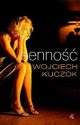
Wojciech Kuczok: Senność (Sleepiness)

My impression after reading the first twenty pages was that the way Kuczok describes the world around him seems to drag forever. I don’t think I’ve read many books where sentences are a page long! It was a bit tiring for a while and I thought about putting the book away and grabbing something else. And then the story suddenly became interesting, the characters more real and the attention to detail more fascinating.

The book takes us through three stories of three different people who do not know each other but who share a common theme – loneliness in the world full of people.

Adam, a freshly qualified doctor from a small village whose parents are oh-so-proud of his achievement and noble profession but will not accept his interest in the same gender.
Robert, a famous book writer with his lack of inspiration for his next award winning novel and with a very interesting family who are impatiently awaiting the novel to come out.
Roza, a billboard face and ex-actress with a husband who loves numbers and logic more than he loves her. It was logic that made him marry her and not love, so no surprise she doesn’t feel fulfilled in the relationship. To make things worse she suffers from an unusual illness – she falls asleep every time she gets excited.

After overcoming the initial dislike for Kuczok’s narrative I really started to enjoy the way he writes. He has a really good ear for the Polish language, its beauty, regional dialects, word games and, most of all, a spot on way of describing what happens inside the mind and soul of his main characters. You really get to know them, think the way they think, feel the way they feel.

The loneliness, the main theme of the book, can be felt on each page, heard in each sentence of any of the characters. Expressed by Robert’s passion for creating stories of people’s lives based on the observation of their legs when they walk by the window of his basement office. By Robert’s fater-in-law’s hectic desire to videotape each of his TV appearances. By Adam’s will to heal people. It’s overwhelming. It makes you realize that it is everywhere around you. Until you find someone to share it with. Kuczok says: “people can only live in other people, depression is nothing else but homelessness, depression only touches people who don’t have anyone to live in”. The ending may seem a bit cheesy with the “lived happily ever after” but I do recommend this book for its art of word and feelings.

Around the same time the book was published the movie based on the same script was released in cinemas. Directed by Magda Piekorz who also directed Pregi, another book based on Kuczok’s novel. I haven’t seen the movie – was it any good?

My rating: YYYYY

Sunday, 22 November 2009

Maria Nurowska: Sprawa Niny S. (Nina S. Case)

This new Nurowska's book was a great come back to Polish literature for me. The book centralises around the murder of Jerzy Baran, middle aged solicitor whose body is found in his office in Warsaw with five bullets in his chest. The suspects are Nina S., a well known book writer and Jerzy's ex-partner and her two twin grown-up daughters. And so the interrogation begins. The officer investigating the case goes through sessions of evidence gathering with Nina's daughters which gives us a detail picture of the family history and events that lead to Nina's relationship with Jerzy. He also goes through Nina's personal diary and learns about Nina's childhood, relationship with the twin daughters' father, twins' childhood, their life experiences and relationships... Nina's relationship with Jerzy did not end well - she gave up everything for him - her money, the family old residence, her time, her career, her feelings. And he took it all and then left her with no remorse. All the facts make the officer deduct that Nina is the person who has most reasons to commit this murder. But as the investigation goes on the less he believes she did it.

Even though the book spins around the case it really is a book about women. About their first relationships with men and how they impact the next ones, the relationships between mothers and their children, the emotions and feelings that accompany them, the tough times to write and publish books in the post-communist Poland. All these reflect a lot of Nurowska's life herself, there are plenty of autobiographical plots in this book. Nurowska spent nine years in a relationship with her Jerzy Baran who left her heart-broken and unwilling to do anything else in her life. Given all this I suppose killing Mr Baran in this book is her revenge. She also knows first hand what it was like to publish books in Poland in the 1990s and in interviews she often says she had more recognition in Germany then in her motherland. Her books have been translated to German, French and Czech, not to English, which is a shame as this book as well as some of her earlier ones are really worth reading. Here is a very recent interview with her (in Polish).

One of the characters says in the book: "It's not the facts that kill us, it's the meaning we assign to them". And then after such a statement we are faced with all the tragic love relationships of Nina and her daughters, the love that almost killed Nina (and Nurowska) and all you can say to that is "easier said than done". But it's good to see hope in Nurowska's life - she's now busy building her own bed & breakfast in Zakopane, surrounded by friends she trusts. And you know there's hope for Nina too.

I really liked this book, I like Nurowska's narration style and I'm looking forward to going home for Christmas and getting some more of her books!

And I also wonder why it is so much more difficult for me to write about a Polish book in English...?

My rating: YYYYY

Thursday, 19 November 2009

Niccolo Ammaniti: I'm Not Scared

What a great refreshing book after my recent gloomy Hornby experience! How different the world seems when you look at it through nine-year-old boy’s eyes. I would like to use the word “innocent” here but Ammaniti made sure his book couldn’t be described in any obvious way.

Nine year old Michele lives his childhood life in a tiny village somewhere in Italy spending his time playing football with the other kids, riding a bike, sitting on a carob tree never rushing home for dinner – things each of us would do if we were nine years old again and lived in an Italian village. Until he makes a startling discovery in an abandoned house near the village...

Kidnapping kids for ransom has been a real plague in Italy during the 1970s which spread from Sardinia to the mainland. Typically kids from wealthy families from the north were kidnapped by poor desperados from the southern parts of the country. Many of them never returned alive. The Italian government tried to deal with the issue by blocking the bank accounts of the targeted families, which ended the epidemic at the time. In the recent years the crime has been on the rise again.

Important national issue as it is, seen through boy’s eyes, shows how surreal and cruel our world is and how adults can choose to be blind to obvious things like child’s right to live their childhood at home with their parents instead of a dark hole in the ground. How much better the world would be if ghosts really were around us and little wash-bears would tell us what would happen next.

I won’t tell you how the story develops as that would spoil the experience of reading this book. Suffice to say it keeps you glued to it until you finish. Beautiful. Moving. Unnerving in the subject but calming through the simplicity of Michele’s life. Made me want to be a child again growing up in the countryside.

A movie has been made based on this book and it had quite good reviews (IMDB) - has anyone seen it?

PS. There were no tractors in Michele’s village... ;)

My rating: YYYYY